

Seattle E-Bike Injury Resource
Washington E-Bike Injury FAQs
Washington narrowed the legal definition of an electric-assisted bicycle in June 2026, and the change reaches further than most riders expect. These answers cover classification, where each class may ride around Puget Sound, helmet rules after the King County repeal, comparative fault, insurance and defective e-bike claims, with links to the statutes behind each one. For the full analysis, see our e-bike accident injury page.
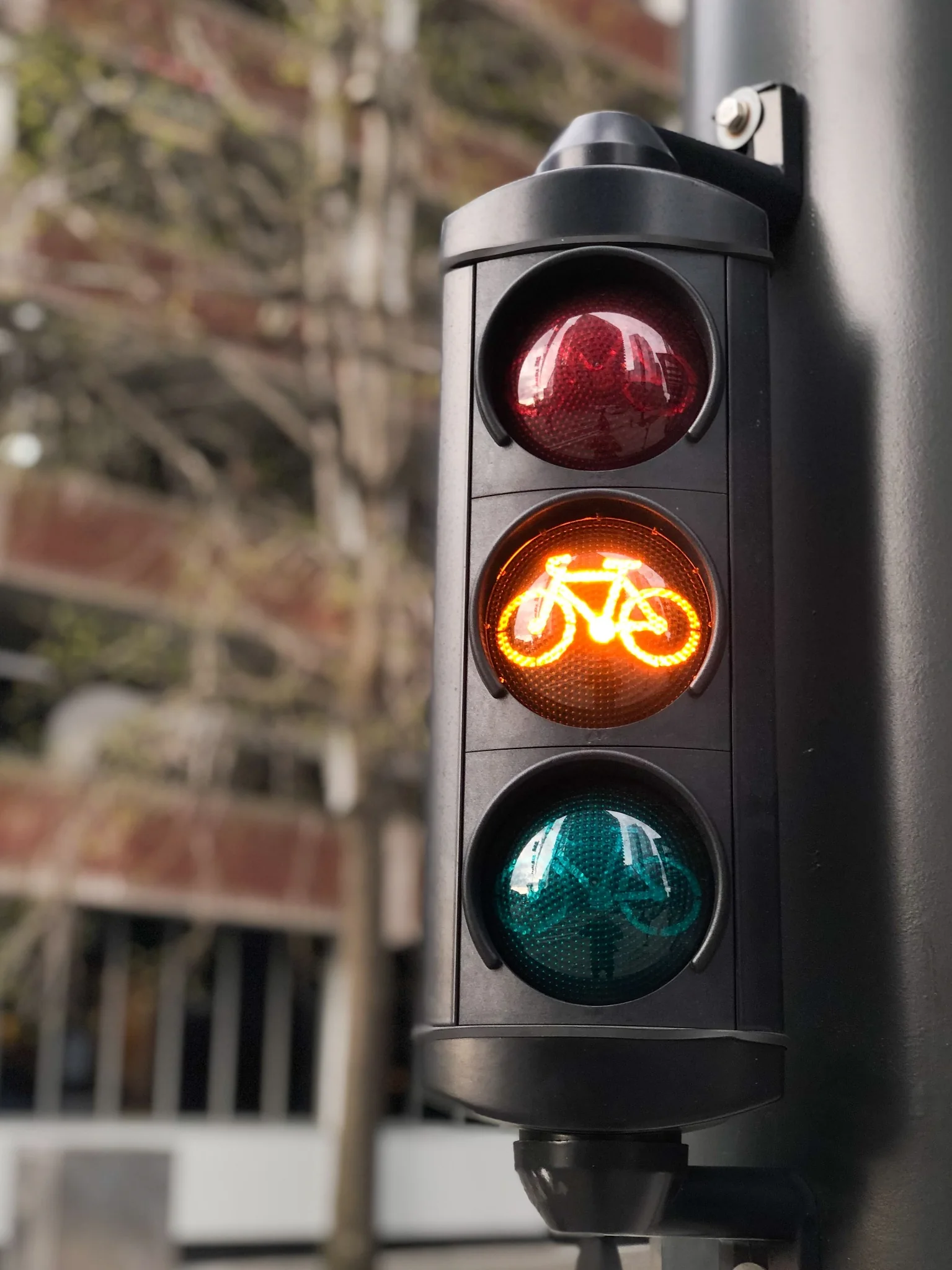
Washington E-Bike Classes and Access Rules
01 Are throttle e-bikes still legal in Washington?
Class 2 e-bikes, which the motor can propel without pedaling, remain part of the statutory definition. The 2026 amendment added a limit around them. A vehicle capable of exceeding 20 miles per hour on solely its electric motor is excluded from the electric-assisted bicycle definition entirely.
So a throttle bike that stays within that limit is still an e-bike under Washington law. One that does not is something else, and the motorcycle and moped definitions may apply instead. The distinction is about capability as built and sold, not about how fast the rider was actually going at the time of a collision.
02 What changed in Washington's e-bike law in 2026?
The Legislature narrowed the definition of an electric-assisted bicycle. Two categories are now excluded: a vehicle capable of exceeding 20 miles per hour on solely its electric motor, and a vehicle designed, manufactured or intended by the manufacturer or seller to be easily configured so that it no longer meets the e-bike requirements, whether by a mechanical switch or button, by a software setting in the drive system, through an online application or by other means the manufacturer or seller intended.
The class definitions themselves did not change. Class 1, Class 2 and Class 3 still work the same way, and the 750-watt cap, saddle and operative-pedal requirements are unchanged.
The Legislature explained the reason in a note to the act. It recognized the growth of electric motorcycle use across the state, particularly among teenagers and young adults, and said the existing motorcycle and moped definitions apply to many of the vehicles excluded from the e-bike definition.
03 When does an electric bike become an electric motorcycle in Washington?
When it falls outside the definition in RCW 46.04.169. That happens if the device can exceed 20 miles per hour on motor power alone, or if the manufacturer or seller built it to be easily reconfigured out of compliance.
The second route surprises people, because it turns on how the vehicle was designed and sold rather than on what the rider did. A bike shipped with a dealer-accessible unlock, an app-based speed setting or a documented derestriction procedure can fall outside the definition even if the rider never used it.
Classification is worth establishing early in a claim. It can affect which facilities the rider was permitted to use, whether licensing and registration provisions come into play and how certain insurance coverages are analyzed.
04 Can e-bikes ride on Seattle sidewalks?
Class 1 and Class 2 e-bikes generally follow Seattle's bicycle sidewalk rules. The rider must operate carefully and prudently at a speed reasonable for the conditions, yield to pedestrians and give an audible signal before overtaking and passing a pedestrian.
Class 3 is different. Under state law, operating a Class 3 e-bike on a sidewalk is unlawful unless there is no alternative for the bicycle to travel over a sidewalk as part of a bicycle or pedestrian path.
Other cities in the region do not follow Seattle. Tacoma's official guidance says Class 1 and Class 2 e-bikes may not be ridden on sidewalks at all, and Everett prohibits sidewalk riding in its downtown Central Business District. The rule can change when the rider crosses a city line.
05 Are Class 3 e-bikes allowed on the Burke-Gilman Trail?
King County Parks does not permit Class 3 e-bikes on its regional trails, and a 15 mph maximum applies, or slower when conditions require. State law also provides that Class 3 e-bikes generally may not be operated on a shared-use path unless the local jurisdiction allows it.
The Burke-Gilman runs through more than one jurisdiction, so the governing rule and the managing agency can change along its length. Before assuming a single rule applies end to end, identify which agency manages the specific segment and check posted signage.
That question matters in a claim for a second reason. When a trail defect contributes to a crash, the entity that owns and maintains the exact segment is the entity a claim would have to be presented to.
06 Do e-bike riders have to wear helmets in Seattle?
King County repealed its all-ages bicycle helmet requirement in 2022, and the Board of Health code index lists the former Title 9 helmet provisions as repealed. Helmet rules are now set city by city. Bellevue and Issaquah require helmets, and Everett requires them for riders 16 and under.
Guidance describing a countywide mandate is out of date, and a fair amount of it is still online.
Separately, not wearing a helmet does not automatically defeat an injury claim. Washington uses comparative fault, and fault has to be tied to conduct that actually contributed to the harm. A driver who turns across a rider's path does not become fault-free because the rider was unhelmeted. In a head-injury case a defendant may still argue helmet use is relevant to the extent of injury, which is a separate question from what caused the collision.
Liability, Comparative Fault, and Product Defects
07 What if my e-bike was unlocked or modified when the crash happened?
It matters, but not in the way insurers often suggest. A modification or unlock can affect whether the device met the statutory e-bike definition, which in turn can affect where it was permitted to operate and how certain coverages are analyzed.
It does not automatically eliminate a claim against a driver who caused the collision. Under Washington law, a violation of a statute, ordinance or administrative rule is generally not negligence per se. It may be considered as evidence of negligence, subject to statutory exceptions, and it still has to be causally connected to the harm.
The practical advice is to stop before repairing or updating anything. Photograph the classification label, the display, the controller and the current settings, and preserve the firmware version. Once a shop updates the software, the evidence of how the bike was configured at the time of the crash may be gone.
08 Can I still recover if I was riding somewhere e-bikes are prohibited?
Often, yes. Washington uses comparative fault. A claimant's percentage of fault reduces compensatory damages proportionally, but it does not automatically bar recovery.
The analysis focuses on whether the rider's conduct actually contributed to the collision. Riding a Class 3 e-bike on a trail segment that excludes Class 3 is a rule violation, but it is not what caused a driver to fail to stop at a trail crossing. Those are separate questions, and the second one is the one that decides fault.
Insurers sometimes present a location or classification issue as though it ends the claim. It is worth having the actual allocation analyzed rather than accepting that characterization.
Insurance Coverage for E-Bike Injuries
09 Does car insurance cover someone hit while riding an e-bike?
Sometimes. The at-fault driver's liability coverage is the usual starting point, and nothing about e-bike classification changes the driver's duty of care.
Beyond that, Washington's casualty-insurance chapter defines a pedestrian as a natural person not occupying a motor vehicle. In McLaughlin v. Travelers Commercial Insurance Co., the Washington Supreme Court held that this statutory definition includes bicyclists and applied it to the coverage dispute before it. That case involved a conventional bicycle and a specific policy, so it is an analytical anchor rather than a guarantee that every e-bike rider automatically has coverage.
Personal Injury Protection must be offered with Washington auto policies, although a named insured may reject it in writing. Underinsured motorist coverage deserves more caution, because RCW 48.22.030 contains an exception applicable while operating or occupying a motorcycle or motor-driven cycle. Since the 2026 definition can push some devices out of e-bike status, classification may become relevant to a coverage argument. That is a question for the actual policy language and the actual device, not a categorical exclusion.
10 What happens after a hit-and-run e-bike collision?
Report it to law enforcement and get medical attention first. Washington requires a driver involved in an injury collision to stop, remain at the scene, provide identifying and insurance information and render reasonable assistance.
From a claim standpoint, uninsured motorist coverage is designed to protect insured people who are legally entitled to recover from hit-and-run drivers and certain phantom vehicles, subject to statutory and policy requirements. A phantom-vehicle claim can carry corroboration and law-enforcement reporting requirements, which is one reason to report promptly.
Identification usually turns on evidence that disappears quickly. Storefront and doorbell cameras, transit and dashcam footage, paint transfer or debris on the bike, plate fragments and witnesses are all worth pursuing within days rather than weeks.
Evidence, Government Claims, and Deadlines
11 Can I bring a claim if an e-bike battery caught fire or a component failed?
Yes. Washington's Product Liability Act addresses manufacturer liability for unsafe design, inadequate warnings or instructions, construction defects and breach of warranty, with separate rules governing product sellers. Brake failures, wheel or fork separations, controller and throttle faults, battery thermal events and charger problems can all support a product claim.
These cases depend heavily on preservation. Keep the bike, the failed components, the charger, the battery and the original packaging, and research CPSC notices and manufacturer recalls for the specific model. Federal warnings issued in March and June 2026 about certain Ridstar e-bikes, covering battery and wiring fires and front-wheel detachment, are examples of why recall research is worth doing early.
One safety caution. A lithium-ion battery that has been through a fire, an impact or a thermal event can reignite. Do not store or transport a damaged battery in a home or vehicle just to preserve it as evidence. Preservation should be arranged with people equipped to handle it safely.
12 Who is responsible for an unsafe public trail or bike lane?
It depends on which entity owns and maintains the specific segment, and that can change from block to block on a regional trail or at the boundary between a state route and a city street. Washington's Supreme Court has recognized the government's common-law duty to maintain roadways in a condition reasonably safe for ordinary travel, and in Camicia v. Howard S. Wright Construction Co. it rejected an overbroad use of recreational-use immunity for a transportation trail merely because bicycling can also be recreational.
These claims carry procedural requirements that have nothing to do with the insurance process. Claims against local government entities are subject to RCW 4.96.020, which includes a 60-calendar-day waiting period after a qualifying claim is presented, with statutory tolling. Claims against Washington State have their own presentment statute and waiting period. Filing a police report or opening an insurance claim does not satisfy either.
Notice evidence matters too. Maintenance records, inspection logs, work orders and earlier complaints can establish how long a condition existed. That evidence should be requested early, because the defect itself is often repaired within days of a reported injury.
13 How long do I have to bring an e-bike injury claim in Washington?
Many Washington personal-injury actions are subject to a three-year limitations period under RCW 4.16.080. Treat that as a general rule rather than a universal deadline. Different defendants, claim theories, tolling rules, wrongful-death provisions and claims involving minors can change the analysis, and government claims add a separate presentment procedure.
The practical timelines are much shorter than three years. Video is overwritten in days or weeks. A bike gets repaired, updated or discarded. A trail defect is patched. Firmware is pushed silently. Those clocks start immediately and do not wait for the limitations period.