Seattle Bike Lawyers
Washington Bicycle Injury Blog
Know your rights. Understand the claim.
Clear answers for Washington cyclists.
Latest Washington Bicycle Injury Articles
23 articles
Legal library · 4 min read
When a driver hits a cyclist, three questions matter: who was at fault, how serious the injuries are, and what coverage is available. Here’s where a Washington claim starts.
Read the article ↗Bicycle Liability and Fault
5 more articles
Legal library · 2 min read
An adjuster assigning you a fault percentage is stating a negotiating position, not a verdict. Washington lets a partially at-fault cyclist recover — and several common fault arguments run into state law.
Read the article ↗
Legal library · 2 min read
Washington has no statewide helmet law, and King County repealed its own in 2022. Going without one does not bar recovery — though head injury cases still call for a real strategy.
Read the article ↗
Legal library · 2 min read
Under RCW 46.61.620, no one may open a door into moving traffic unless it is reasonably safe. That puts the occupant in a difficult liability position — though comparative fault still applies.
Read the article ↗
Legal library · 2 min read
Washington law is more favorable here than most people expect. On a sidewalk or in a crosswalk, a cyclist carries the rights and duties of a pedestrian — and drivers owe the same duty to yield.
Read the article ↗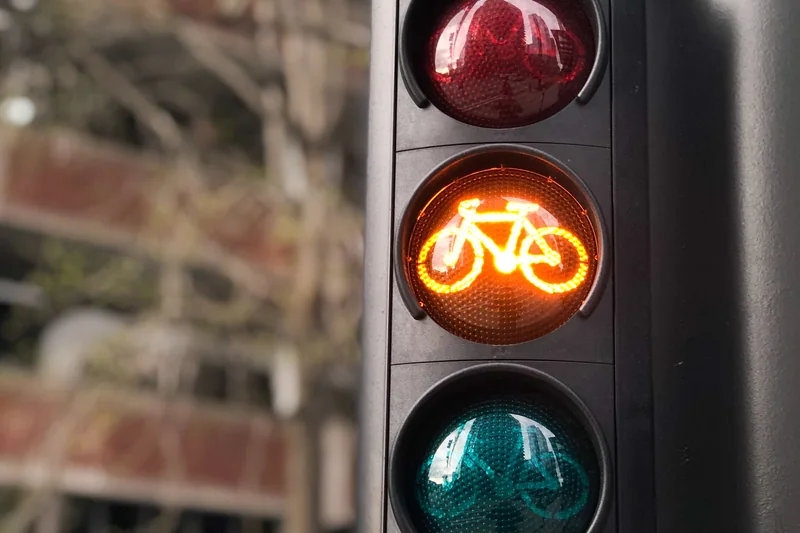
Legal library · 2 min read
Rolling through a stop sign on a bicycle is legal in Washington under RCW 46.61.190. The real fault question is whether you yielded to traffic that had the right of way — a different question entirely.
Read the article ↗Insurance Coverage After Bicycle Accidents
5 articles
Legal library · 2 min read
For most people, yes — in two meaningful ways. PIP and UM/UIM coverage typically follow you as the insured person rather than following your car, which is why they can reach a crash you were riding through.
Read the article ↗
Legal library · 2 min read
PIP, health insurance, provider liens, and the at-fault driver's policy each carry part of the load at different stages. The sequence affects how much of your eventual recovery you keep.
Read the article ↗
Legal library · 2 min read
A hit-and-run does not necessarily leave you without recourse. Under most policies and RCW 48.22.030, an unidentified driver is treated like an uninsured one — and the claim shifts to your own insurer.
Read the article ↗
Legal library · 2 min read
Washington sets rideshare insurance by app phase under RCW 46.72B.180, and the difference between waiting for a request and carrying a passenger can be several hundred thousand dollars of coverage.
Read the article ↗
Legal library · 2 min read
PIP is no-fault coverage that follows you as the insured rather than following your car. That is why it can cover a crash you were riding through — and why it matters most in the months before a claim resolves.
Read the article ↗Damages and Bicycle Claim Value
5 articles
Legal library · 2 min read
There is no formula, and anyone quoting a number before understanding the facts is guessing. What valuation does involve is a set of distinct categories — and factors that quietly raise or suppress value.
Read the article ↗
Legal library · 2 min read
The claim reaches further than most people assume. It is not limited to paychecks you missed — it can also cover lost earning capacity if the injury changes what you can do going forward.
Read the article ↗
Legal library · 2 min read
A $300 commuter and a $12,000 carbon road bike are both compensable. What differs is the evidence required — and how hard you have to push back on a reflexive depreciation number.
Read the article ↗
Legal library · 2 min read
Washington's eggshell plaintiff rule means vulnerability is not a defense. Expect the insurer to use your medical history anyway — and expect the answer to be a documented baseline.
Read the article ↗
Legal library · 2 min read
It varies too much for a general number to mean anything. What is worth understanding are the variables — clear liability and finite injuries on one end, disputed fault and government defendants on the other.
Read the article ↗Special Defendants, Evidence, and Deadlines
7 articles
Legal library · 2 min read
Generally three years from the date of injury under RCW 4.16.080. Government defendants require a formal claim and a sixty-day wait first — and the trap there is usually jurisdiction, not timing.
Read the article ↗
Legal library · 3 min read
Yes — and in many situations the law requires more. On a multi-lane road, a driver has to change lanes entirely. Three feet is the floor for the tightest scenario the statute allows.
Read the article ↗
Legal library · 2 min read
The liability principles are the same as any crash. What changes is the defendant picture — DSP contractors, commercial coverage, and electronic fleet records that do not survive long.
Read the article ↗
Legal library · 2 min read
You rarely prove it at the scene. Phone records, nearby camera footage, and crash reconstruction are the tools — and every one of them is on a clock.
Read the article ↗
Legal library · 2 min read
Largely yes, with class-based distinctions that affect where you can ride. In a serious crash, classification also feeds directly into the comparative fault argument.
Read the article ↗
Legal library · 2 min read
A handful of decisions in the first minutes have consequences that follow the claim for years. Here is what matters, roughly in the order it matters.
Read the article ↗
Legal library · 2 min read
Potentially. Washington cities owe a duty to keep roads reasonably safe for ordinary travel, and that duty extends to cyclists — but these cases are evidence-heavy and procedure-sensitive from day one.
Read the article ↗